
Hydrogen Sensors for EV Battery Safety and Leak Detection
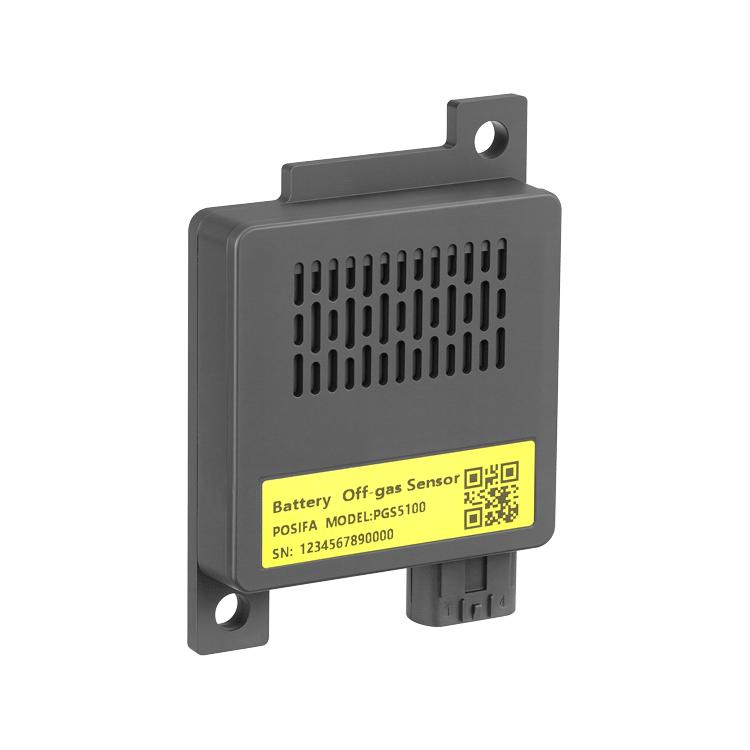
Posifa’s PGS5100 Series hydrogen sensors enable fast, reliable detection of hydrogen in safety-critical environments such as EV battery packs, fuel cell systems, and industrial facilities. The sensors measure hydrogen concentrations from 0 % to 25 % using MEMS thermal conductivity technology.
Integrated humidity and barometric pressure sensors automatically compensate for environmental variations, helping maintain measurement accuracy across temperature, humidity, and altitude changes. Designed for embedded monitoring systems, PGS5100 sensors combine fast response, long service life, and robust operation in harsh environments.
Optimized for EV Battery Safety and Thermal Runaway Detection
Hydrogen can appear during the early off-gas stage of certain battery events, before heat escalation and ignition occur. Detecting hydrogen at this stage can provide an early indicator of thermal runaway development in EV battery systems and allow mitigation systems to respond sooner.
Key Benefits for Hydrogen Monitoring Systems
- Detect hydrogen leaks early in safety-critical environments
- Enable earlier response to EV battery off-gas events
- Maintain accuracy with humidity and pressure compensation
- Deliver reliable long-term operation in harsh conditions
- Support robust automotive and industrial system integration
Key performance characteristics include:
- Fast response for real-time hydrogen monitoring
- Long-term stability with operating life exceeding 15 years
- Non-reactive sensing technology resistant to contaminants
- Reliable operation in harsh environmental conditions
PGS5100 sensors support early hydrogen detection and continuous monitoring in applications such as:
- EV battery packs and battery energy storage systems
- Hydrogen leak detection in fuel cell systems
- Industrial hydrogen monitoring and safety systems
- Process monitoring in hydrogen handling environments
These sensors support monitoring architectures where rapid detection and long-term reliability are critical.
Application Spotlight: Early Detection of EV Battery Thermal Runaway
Lithium-ion battery failures often begin with a phase of electrolyte decomposition and gas generation before heat escalation and ignition occur. During this early stage, hydrogen may be released inside the battery enclosure before visible signs of failure appear.
By detecting hydrogen during this initial off-gas phase, monitoring systems can identify abnormal battery conditions earlier and trigger mitigation actions such as system shutdown, isolation, or ventilation.
PGS5100 hydrogen sensors enable this type of early warning by providing:
- Fast response for real-time gas monitoring
- Stable operation inside enclosed battery pack environments
- Long service life suited for vehicle lifetime requirements
- Reliable detection without catalytic sensing elements
These capabilities make the PGS5100 well suited for EV battery safety systems, battery energy storage systems, and other lithium-ion battery monitoring applications.
MEMS Thermal Conductivity Technology for Stable Measurement
The PGS5100 Series determines hydrogen concentration by measuring thermal conductivity changes in the surrounding gas mixture. Because hydrogen and air have significantly different thermal conductivity, small changes in hydrogen concentration produce measurable sensor responses.
The sensors incorporate Posifa’s second-generation thermal conductivity die and are designed for stable operation in demanding environments. Environmental compensation improves measurement accuracy when humidity levels or atmospheric pressure change.
Key performance characteristics include:
- Fast response for real-time hydrogen monitoring
- Long-term stability with operating life exceeding 15 years
- Non-reactive sensing technology resistant to contaminants
- Reliable operation in harsh environmental conditions
- Why Use Thermal Conductivity Sensors for Hydrogen Detection?
Thermal conductivity sensing offers several advantages compared with catalytic bead or electrochemical hydrogen sensors. Because the measurement is based on the physical thermal properties of gases rather than a chemical reaction, thermal conductivity sensors provide stable performance without degradation from catalyst poisoning or reactive contaminants.
For EV battery monitoring and hydrogen safety systems, thermal conductivity sensors provide:
- Reliable detection without catalytic reaction mechanisms
- Resistance to contamination or poisoning by environmental gases
- Stable long-term operation with minimal drift
- Fast response suitable for real-time safety monitoring
Designed for Robust System Integration
PGS5100 sensors are packaged for installation in embedded monitoring systems used in automotive and industrial environments.
Key integration features include:
- MODBUS-RTU / RS-485 communication interface
- 5 V supply operation
- IP6K9-rated enclosure for harsh environments
- Automotive-grade connector with wire harness
- Operating temperature range from –40 °C to 85 °C
- Datasheet_PGS5100_MEMS_TC_H2_Re…
These features help engineers integrate reliable hydrogen monitoring into safety systems, energy platforms, and industrial equipment.
PGS5100 Series at a Glance
Model: PGS5100
Interface: RS-485 (MODBUS-RTU)
Hydrogen Measurement Range: 0 % to 25 % hydrogen concentration
The sensor module should be installed in locations with adequate airflow to ensure accurate measurement and rapid detection of hydrogen leaks.
Key Benefits for Hydrogen Monitoring Systems
- Detect hydrogen leaks early in safety-critical environments
- Enable earlier response to EV battery off-gas events
- Maintain accuracy with humidity and pressure compensation
- Deliver reliable long-term operation in harsh conditions
- Support robust automotive and industrial system integration