
AI Data Centers
Gaining Visibility into the Last 5 % of Thermal Behavior in Hybrid Cooling Systems
Why Airflow Measurement Is Becoming Critical in AI Infrastructure
The rapid growth of AI computing is transforming data center design. Modern AI training clusters now operate at rack power levels of 40 kW, 60 kW, and in some cases upwards of 150 kW.
Liquid cooling has become essential for removing heat from high-performance processors. However, it does not eliminate the need for airflow.
Even in advanced liquid-cooled systems, a portion of total heat remains in components that cannot be directly liquid cooled, including memory, storage, networking hardware, and power delivery circuits.
In high-density systems, this residual heat is concentrated in crowded environments where airflow paths are constrained, uneven, and difficult to predict.
For this reason, airflow monitoring is becoming an important tool for maintaining performance and reliability in next-generation AI infrastructure.
The AI Cooling Paradox: Liquid Cooling and the Last 5 %
Liquid cooling can remove up to ~95 % of total system heat. However, the remaining heat does not disappear — it becomes concentrated in specific regions of the system.
In a modern high-density rack, even 5 % residual heat can represent several kilowatts — comparable to the full thermal load of a traditional air-cooled rack, but now confined to a much smaller and more complex space.
At the same time, liquid cooling infrastructure reshapes airflow inside the system. Cold plates, tubing, and manifolds occupy space that previously allowed more uniform airflow, creating:
- Narrow and uneven airflow paths
- Localized thermal pockets
- Airflow “blind spots” that are difficult to model
Cooling performance in these environments increasingly depends on airflow behavior in small, hard-to-observe regions.
From Cooling to Observability
Traditional monitoring approaches rely primarily on temperature sensing. However, temperature is a lagging indicator of cooling performance.
Airflow changes first. Temperature rise follows.
By the time a thermal alarm is triggered, localized airflow degradation may already be impacting system performance or reliability.
As a result, cooling is no longer just about removing heat.
Engineers increasingly need to measure and understand how cooling behaves inside the system.
Air Velocity: The Controllable Variable
In forced convection cooling, most parameters are fixed by system design or environmental conditions. Air velocity is the primary variable that can be adjusted in real time.
Small changes in airflow — caused by dust buildup, fan degradation, or partial blockage — can lead to disproportionate temperature increases in dense systems.
Monitoring airflow directly provides a faster and more actionable signal than temperature alone, enabling earlier detection of cooling issues and more effective system control.
Enabling Visibility into Thermal Uncertainty
In hybrid cooling architectures, liquid cooling removes most of the heat, while airflow manages the remainder.
This remaining portion — often a small percentage of total heat — has an outsized impact on system stability because it exists in constrained and difficult-to-measure regions.
By measuring airflow directly, engineers can:
- Detect cooling degradation before temperature thresholds are reached
- Identify localized airflow disruptions
- Gain insight into regions that are difficult to simulate or predict
- Improve control over system-level thermal behavior
Posifa’s MEMS airflow sensors provide this layer of observability, helping engineers monitor and understand the portion of thermal behavior that is otherwise difficult to see.
MEMS Airflow Sensors for Data Center Monitoring
Posifa’s airflow sensors are fully solid-state, with no moving parts, enabling reliable operation in demanding environments.
Key advantages include:
- Fast response times for real-time airflow monitoring
- Compact size for integration inside equipment airflow paths
- High sensitivity to low airflow velocities
- Long-term reliability with no mechanical wear
- Direct airflow measurement rather than inferred thermal signals
These sensors can be deployed throughout servers, racks, and cooling systems to provide continuous visibility into airflow behavior.
Typical Applications
Posifa MEMS airflow sensors can be integrated into a wide range of systems used in AI infrastructure and data center cooling environments.

Server and AI Accelerator Cooling
Monitor airflow inside high-density servers to detect fan degradation, airflow obstructions, or cooling imbalance before temperature alarms occur.
Rack-Level Cooling Systems
Measure airflow within AI racks to verify proper air distribution and support dynamic fan control in high power computing environments.
Data Center HVAC Monitoring
Provide real-time airflow measurement in air handling units, cooling ducts, and containment systems to ensure proper cooling performance.
Filter and Air Path Monitoring
Detect filter clogging or airflow restrictions before they lead to overheating or reduced cooling efficiency.
Equipment and Enclosure Cooling
Monitor airflow inside networking equipment, power electronics, and other high-density systems where airflow is critical for thermal management.
Improve Visibility into AI System Cooling
As AI infrastructure continues to scale, cooling performance is no longer defined solely by how much heat can be removed.
It is increasingly defined by how well that cooling behavior can be understood, measured, and controlled.
Posifa’s MEMS airflow sensors provide a direct view into airflow behavior inside servers, racks, and cooling systems — helping engineers detect issues earlier, optimize performance, and maintain system stability.
Related Products

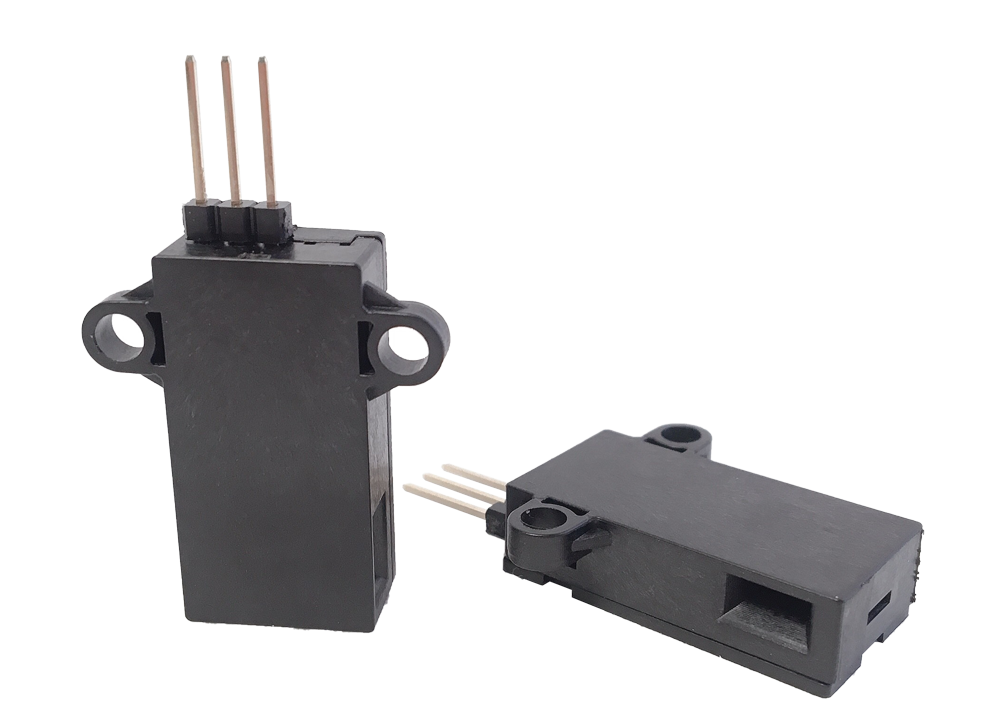
PAV1000 Series
For thermal management, filter monitoring, or damper control. Analog voltage output trimmed at zero and full scale. Learn more...

PAV3000 Series
For data center thermal management. SMT (surface mount technology) package. Digital I2C ouptut trimmed at zero and full scale. Learn more...